


Wood Factory
Projects
Industries
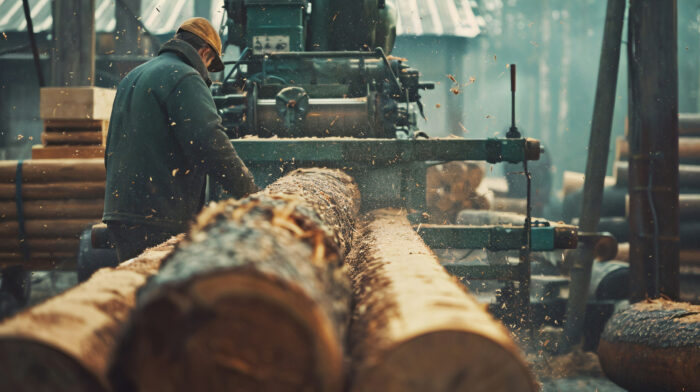
Project: Wood Processing Factory Automation (Cutting & Chipping Lines)
1. Project Overview
This project scope covers the complete automation, control, and commissioning of a wood production facility, which is comprised of two distinct and independent processing lines:
Line 1: Wood Cutting Section
Line 2: Wood-to-Chip Conversion Section
2. Control System Architecture
The control philosophy is based on a robust, decentralized system. Each production line will be managed by its own dedicated PLC and monitoring (HMI/SCADA) system, allowing for independent operation, control, and fault management.
Primary Network: The core communication protocol between PLCs, I/O, and monitoring systems will be Profinet, ensuring high-speed data exchange and reliable industrial performance.
Secondary/Legacy Integration: To ensure maximum flexibility for development, data transfer, and integration of third-party devices, the system will incorporate serial converters. This provides a gateway for data transfer via the RS485 protocol (e.g., Modbus RTU).
3. VFD (Variable Frequency Drive) Integration
A critical component of this project is the integration of Variable Frequency Drives (VFDs) for all major motor-driven processes. This is essential for both process optimization and energy efficiency.
Application: VFDs will be installed on high-torque and variable-load equipment, including:
Main Saws and Cutters
Wood Chippers and Grinders
Infeed and Outfeed Material Handling Conveyors
Function: The VFDs will enable precise speed control, allowing the system to:
Optimize Throughput: Adjust conveyor and cutter speeds to match wood type, size, and load.
Save Energy: Significantly reduce power consumption by running motors at the exact speed required, rather than at full power.
Reduce Mechanical Stress: Provide soft-starting and stopping, which dramatically lowers mechanical shock on gearboxes and couplings, extending equipment life.
Control: VFDs will be networked (primarily via Profinet or utilizing the RS485 capability) to the main PLC, allowing for centralized speed control, monitoring of motor torque/current, and advanced fault diagnostics.
4. Project I/O Summary
The total I/O footprint for this project is as follows:
Digital Inputs (DI): 792
Digital Outputs (DO): 828
Analog Inputs (AI): 250
Analog Outputs (AO): 192